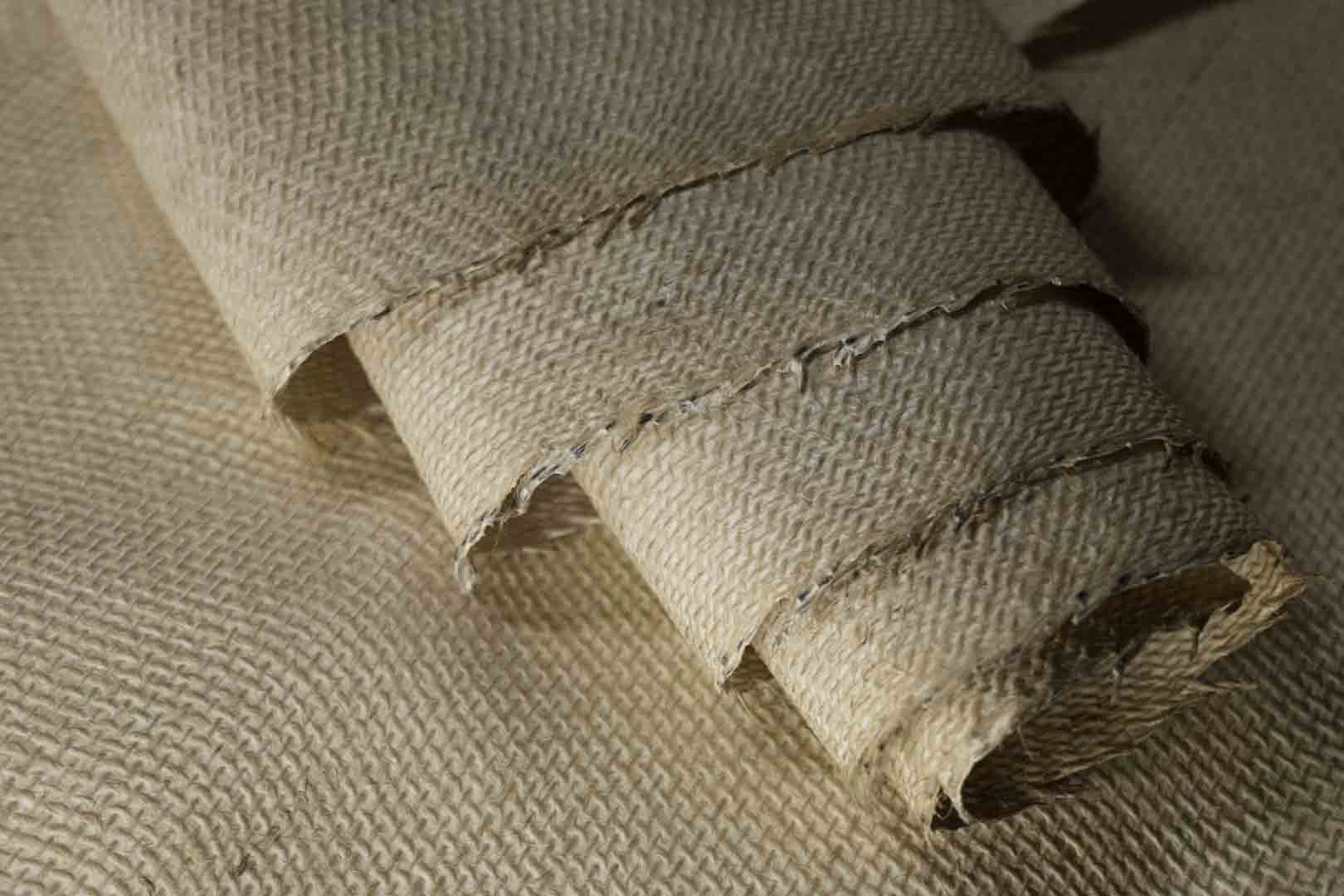
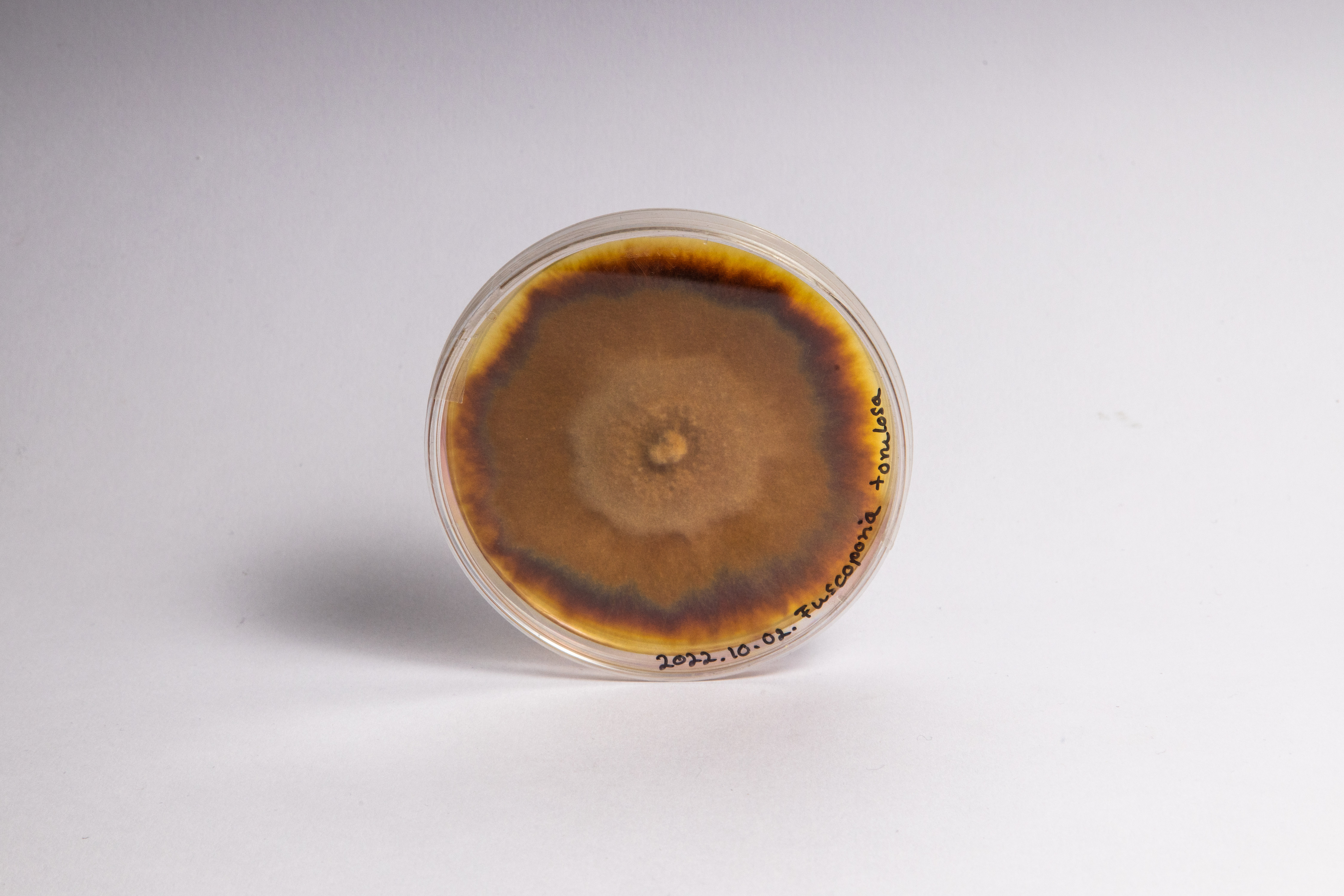
Our story began during Gergő's university years at an art university, where his curiosity about alternative materials led him to explore the world of fungi. With no formal training in mycelium-based materials, he began learning through autodidactic experimentation, combining research with hands-on practice. Working from home, he developed low-tech methods for creating sterile conditions and cultivating fungal mycelium using accessible tools and resources. Through countless experiments, failures, and discoveries, he began to understand the potential of mushrooms as a new material for design and making.
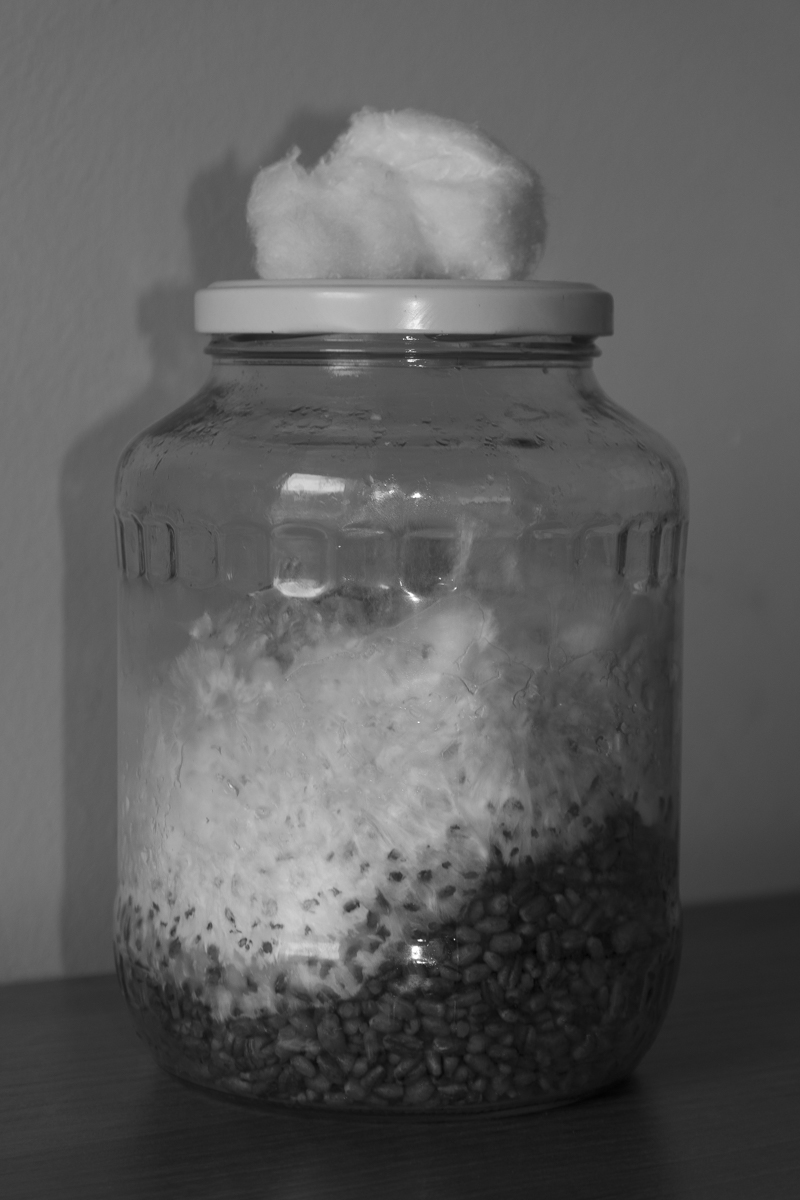
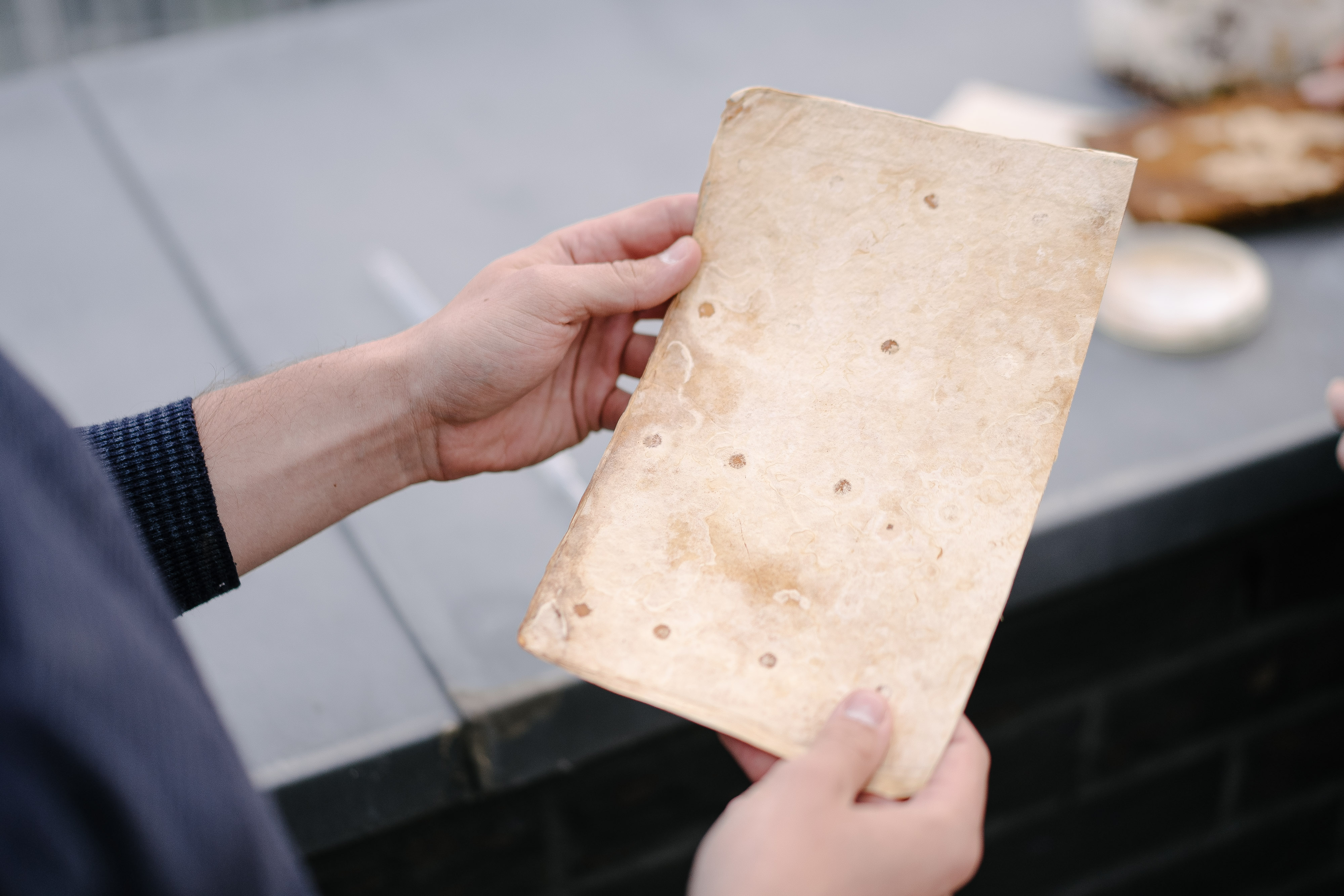
Gergő continued his independent research by studying existing mycelium material companies and publicly available cultivation methods. Working from his home setup, he began developing his own approach to growing mycelium into leather-like sheets. The early experiments were small in scale and slow to develop, but each trial brought new insights into the behavior and potential of fungal materials. Despite the limitations of working alone with basic equipment, the first results were already promising.
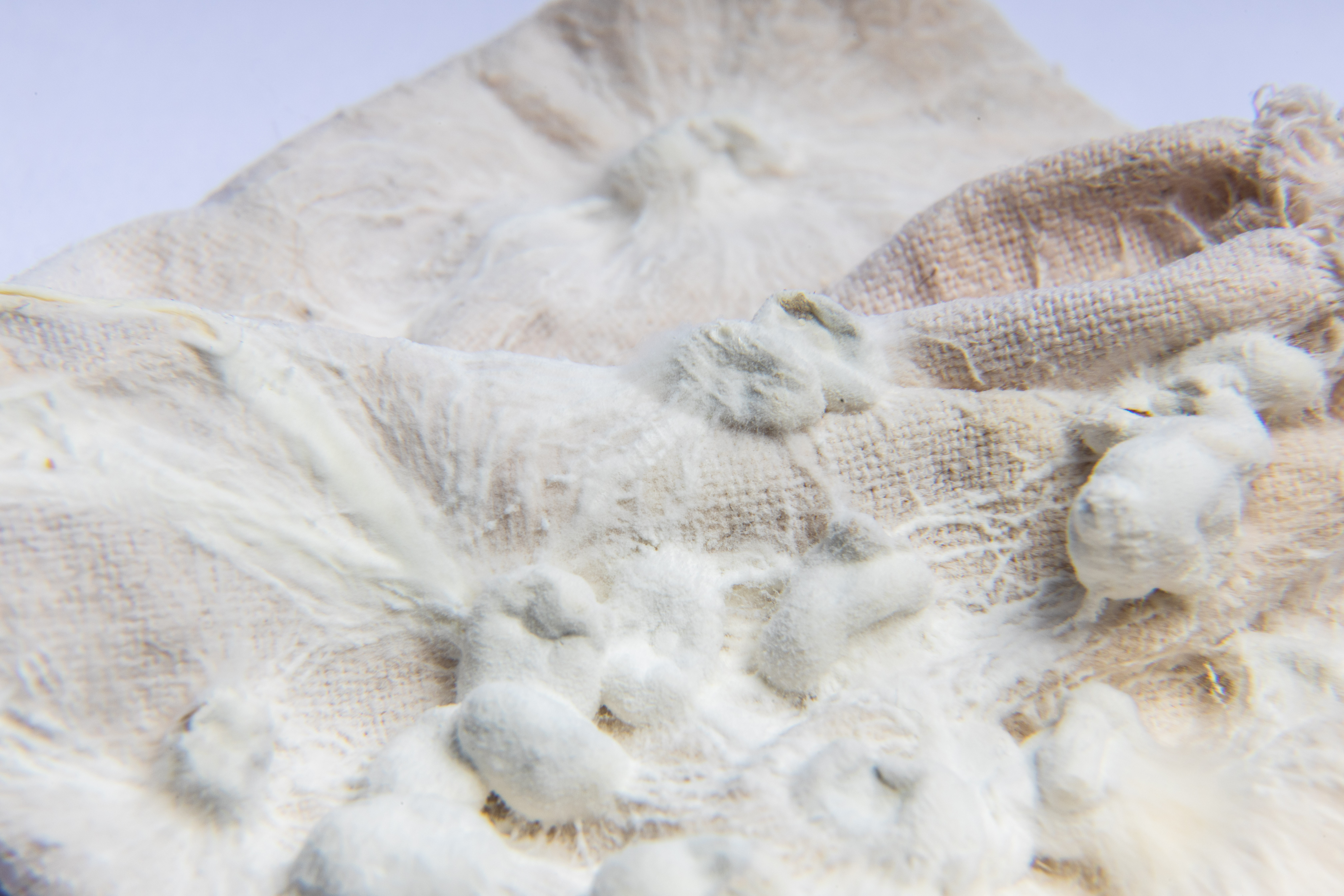
As the research progressed, Emese joined the project, bringing her expertise in textile design and a new perspective on the development and application of mycelium-based materials. Together, they began a more systematic exploration of fungal growth, material structure, and textile processes. Over time, their experiments led to the development of a method for growing their first consistent mycelium sheets. They also began focusing on a specific fungal species, allowing them to better understand and refine its unique properties. This new approach marked an important step forward, opening up new possibilities for the project and accelerating their material development.
With the growing potential of their research, Gergő and Emese established Fraxinea as a framework for taking their material development beyond experimental work. The project began to evolve from independent experimentation into a structured research and development initiative, with a clear focus on advancing mycelium-based materials. This provided the foundation for developing their methods and exploring how the materials could be refined and applied. Fraxinea became a platform through which their research could continue to grow and develop collaborations.
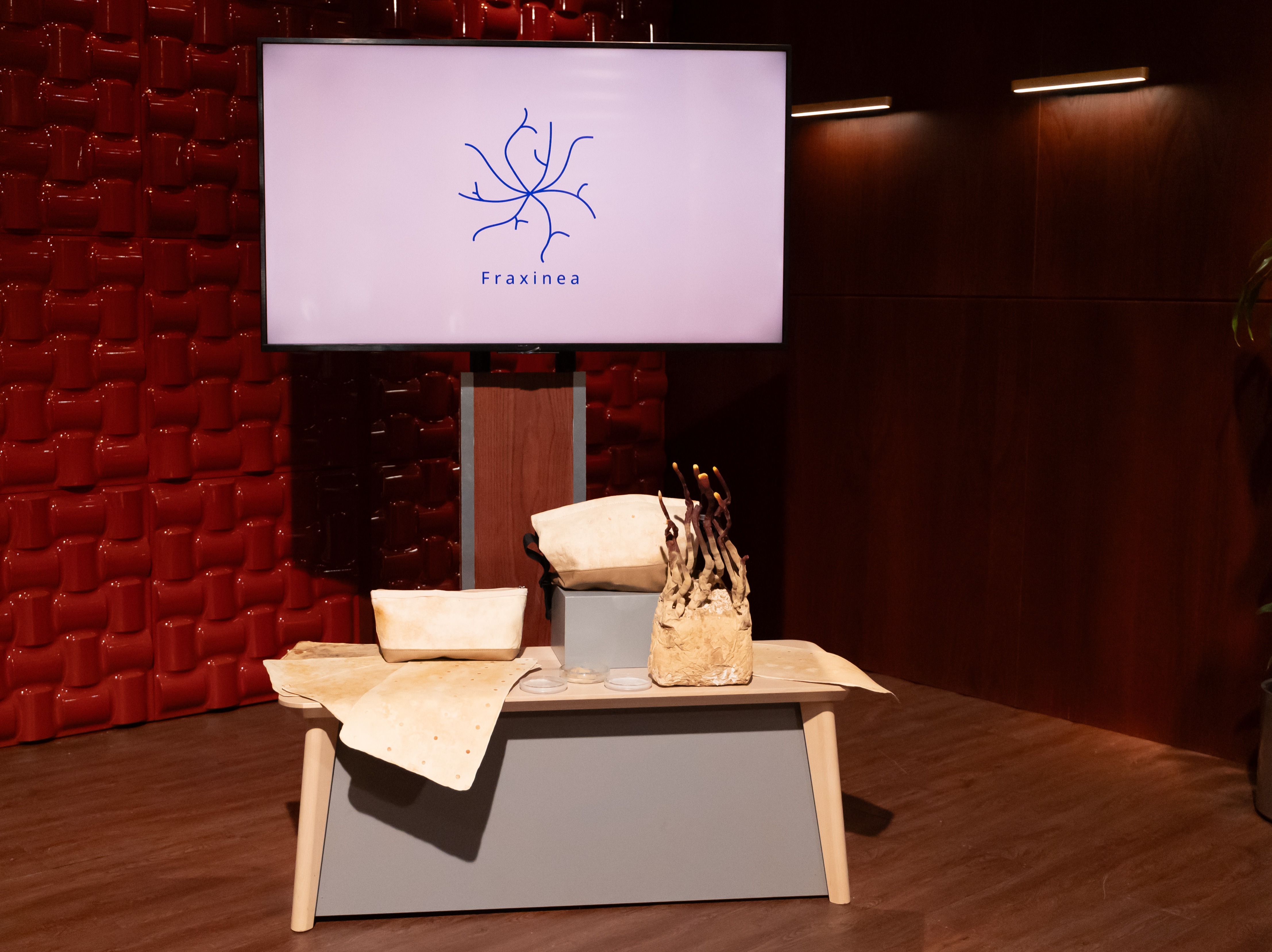
As Fraxinea developed, the team joined several mentorship and incubation programs that helped transform their research into a more structured venture. Through programs such as the MOME Incubation Program, they gained a deeper understanding of the startup ecosystem, business development, and the different approaches to building a growing company. These experiences helped them define their direction, strengthen their business model, and better understand how to bring material innovation to the market. Fraxinea later participated in the Hungarian version of Shark Tank, where they secured their first seed investment. This marked an important transition from an experimental project toward a company with the resources and ambition to scale its research and development.
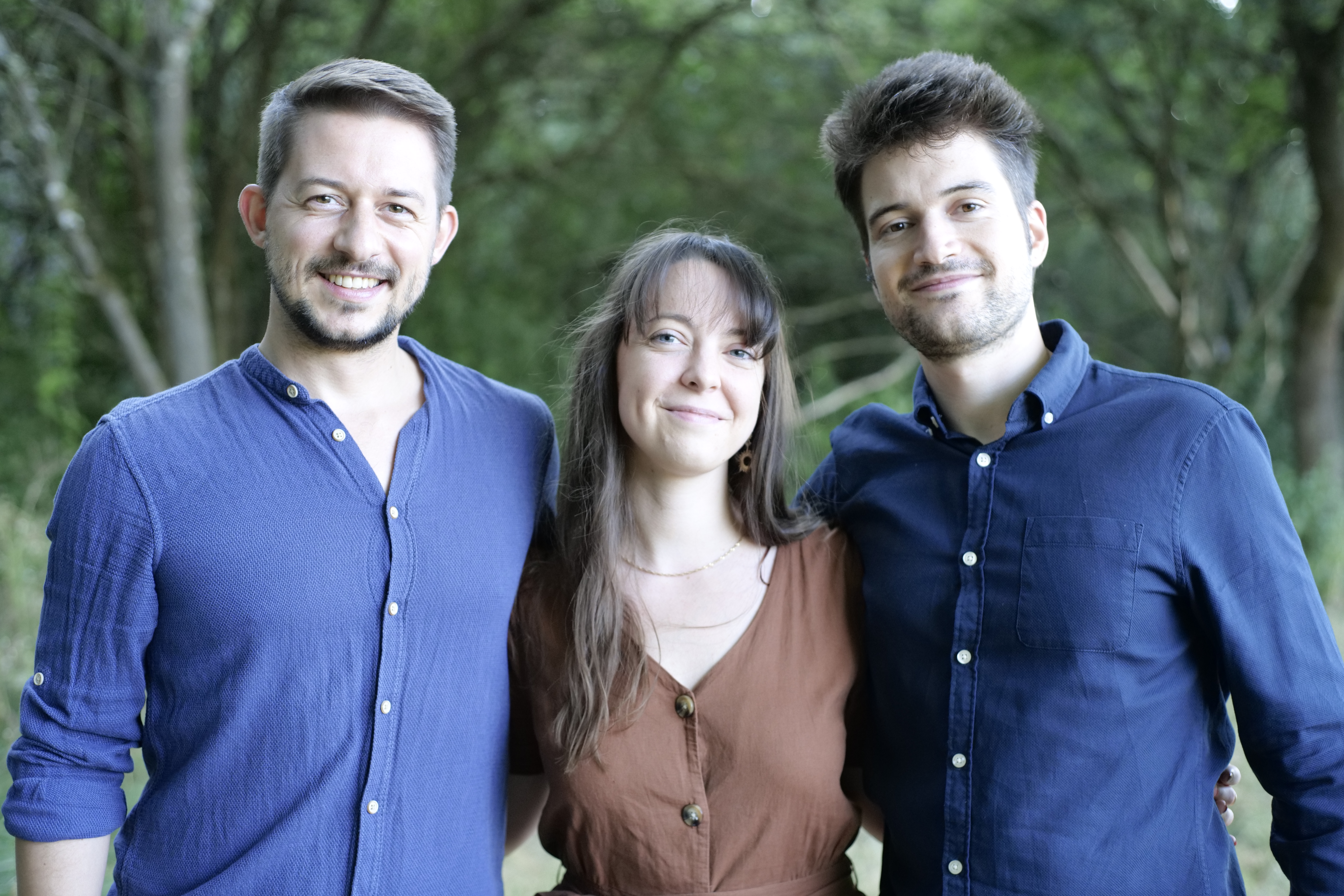
As the project entered a new stage of development, Robi joined the team, bringing essential expertise in business development, finance, and strategic planning. His experience complemented the team’s existing strengths and helped establish a stronger foundation for turning Fraxinea’s research into a sustainable business. With this expanded team, Fraxinea was formally established as a legal entity, creating the framework for its continued growth. The team then joined the STRT programme, further developing their knowledge of business development, strategy, and the startup ecosystem.
With the team and business foundations in place, the focus shifted toward advancing the technology itself. Building on years of experimentation, the team developed a new cultivation method that introduced a different approach to growing mycelium-based materials.
The technology enables the material to be cultivated in metre-scale lengths rather than as individual sheets, opening up new possibilities for production and application. This represented a significant technological step forward and introduced a new approach to the growing mycelium material community. It also created the foundation for moving from small-scale material experiments toward a scalable production process.
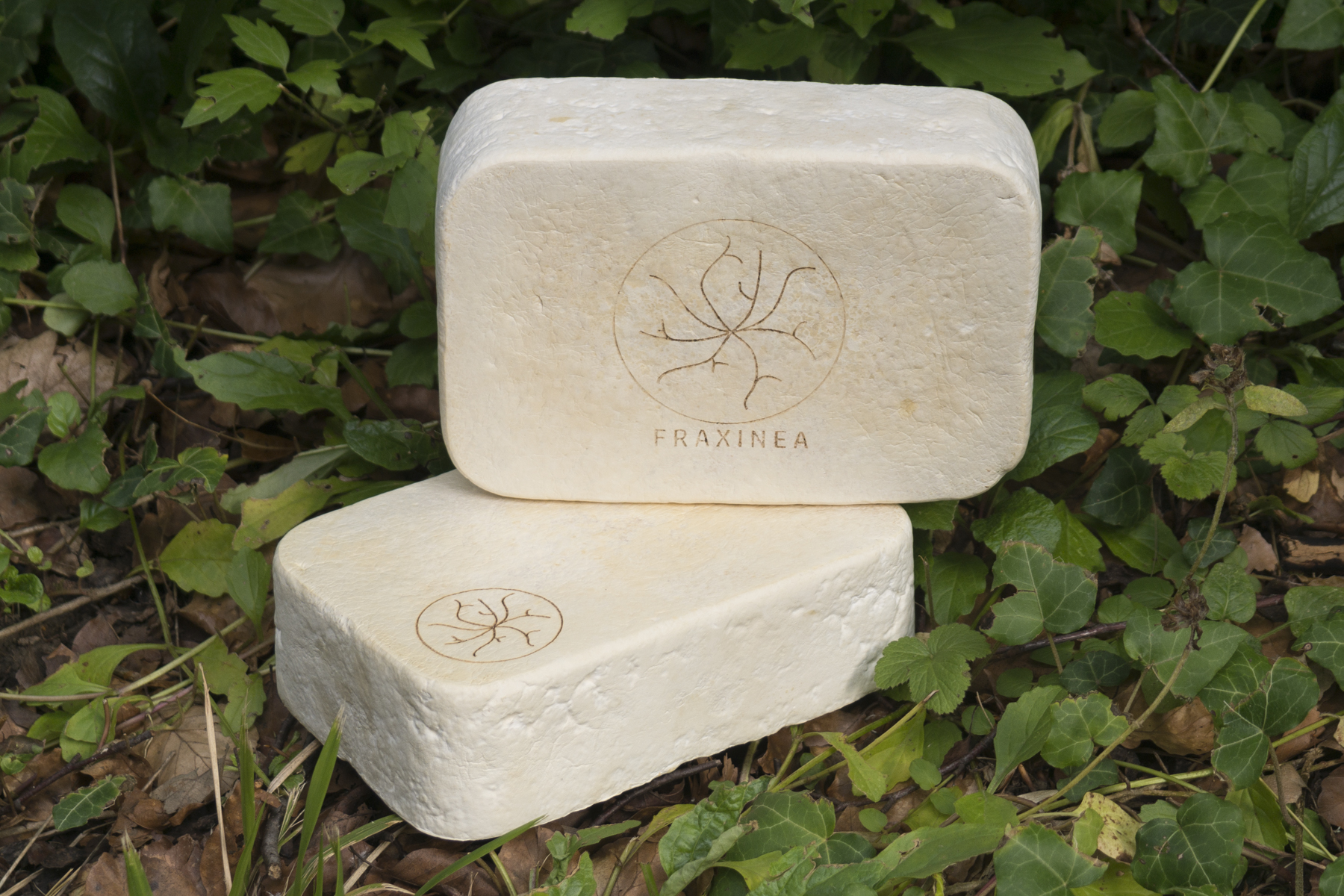
Building on the new cultivation technology, Fraxinea took its first step toward the market by developing its first consumer products: mycelium-based yoga mats and yoga blocks. To ensure the materials met real user needs, the team worked closely with members of the yoga community throughout the product development process. Their feedback helped shape the materials, functionality, and overall product design. The products were then introduced to the public through Brancs, a Hungarian crowdfunding platform, marking Fraxinea’s transition from material development to its first market launch.
Today, Fraxinea continues to focus on material research and development, building on the knowledge gained through years of experimentation, user feedback, and real-world testing. Our work aims to create materials that perform across multiple dimensions, from durability and flexibility to strength, surface quality, moisture resistance, and everyday usability. By continuously testing and refining our materials, we work toward solutions that are not only bio-based, but also genuinely functional and suitable for real-world applications. This approach has led to the development of our new material line, Calcutta. Designed as a versatile mycelium-based textile, Calcutta represents the next step in our ongoing exploration of high-performance natural materials.
Our vision is to take Fraxinea from an innovative material developer to a leading force in the next generation of sustainable materials. We are building partnerships with manufacturers, designers, brands, and industry leaders to bring our technologies into real-world applications at scale. By expanding our production capabilities and developing a broader portfolio of high-performance mycelium materials, we aim to make bio-based alternatives accessible across multiple industries. Our ambition is not simply to create new materials, but to help reshape how materials are grown, produced, and used—making nature-based solutions a viable part of everyday products and global manufacturing.
Best AI Website Creator